
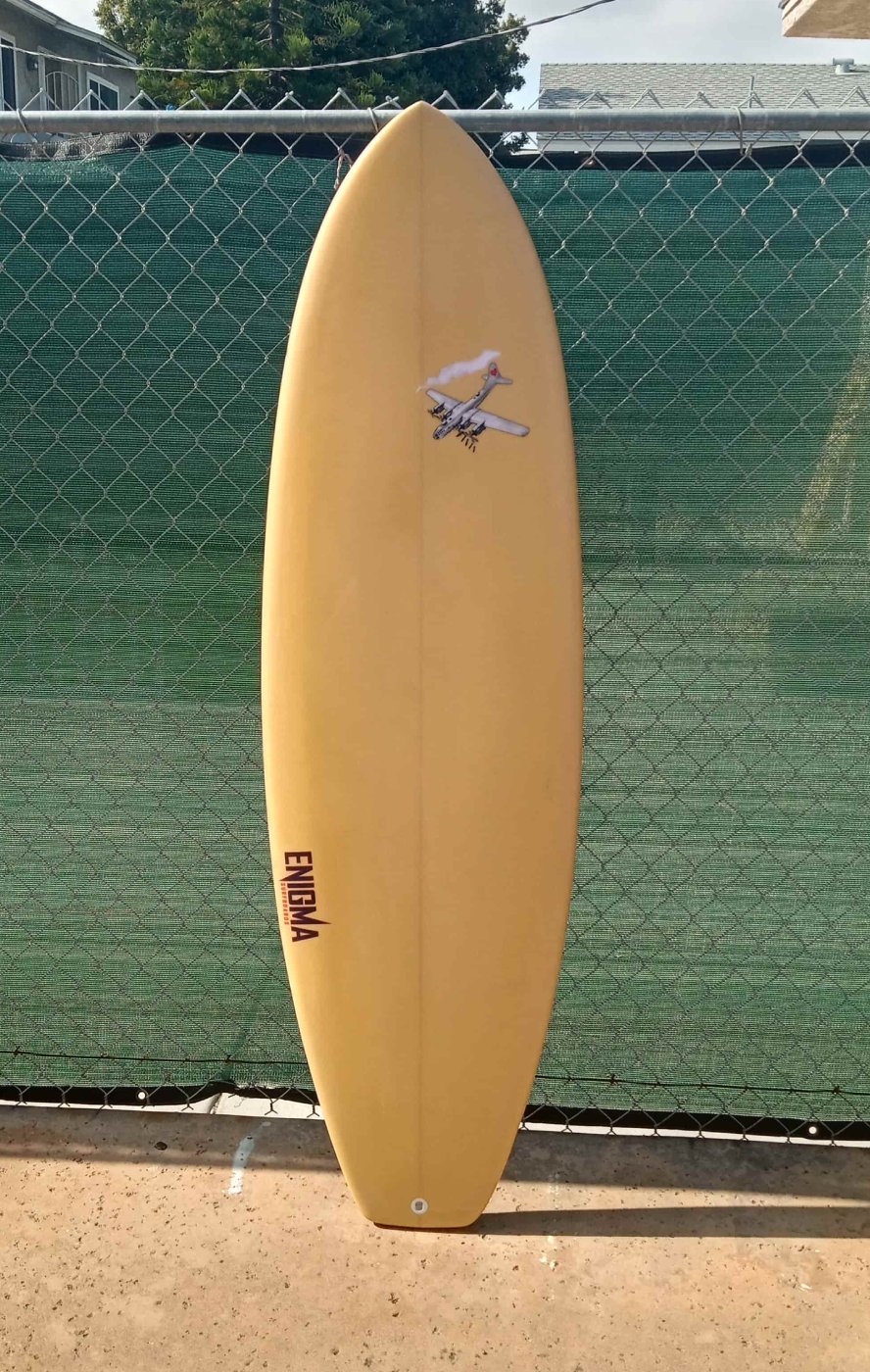
Kevlar Tombstone
A Tombstone model board in Kevlar construction. Flex, strength, and durability are the key features of my Kevlar boards. They are lightweight but do not chatter like EPS as the Kevlar dampens impact and vibration.
Don’t know what Kevlar is?
That’s ok – most people don’t.
Surfboards break, surfboards ding, surfboards crease, surfboards buckle, surfboards delaminate … SURFBOARDS SUCK.
A Tombstone model board in Kevlar construction. Flex, strength, and durability are the key features of my Kevlar boards. They are lightweight but do not chatter like EPS as the Kevlar dampens impact and vibration.
Now that I probably have your attention, let me tell you about these boards and their story. I saw a longboard 30 years ago on the east coast that was double sided Kevlar. I knew nothing about it at the time.
Enter Chris Tillman from Ocean City, MD, where I lived at the time. He was walking down the beach with that longboard, and I remember asking him something about it. It stuck with me that he said how light and strong it was. I never saw him ride it and I never saw the board again. I never heard anyone, anywhere talk about it, so it kind of got buried in my memory for a long time. It was a tiny topic of conversation that would pop up again with people over two decades until I had some exposure to working on boats.
I saw some attempts at people using a carbon/Kevlar hybrid weave on glass jobs (surfboards) and they were absolute bricks! This industry uses a variety of rail reinforcements and they were all thin strip carbon back then in the mid 2000s. However, I will say those early attempts were at least a bit more substantial than the “fake” carbon strip trend you see on center strips and rail tail areas today. The stuff is basically rice paper!
Carbon was now on hollow Aviso boards and they looked really interesting, but they were black; and black is no good for heat stress and wax melting. But that was not my main detractor from working with it. At the time, boards with pure carbon were hollow and I couldn’t do that as a hand shaper with access to industry standard resources and construction methods. I don’t want to make too big of a point but the reason Aviso didn’t work out, in my opinion, was because of two factors: A: It was too expensive at the time. People didn’t pay $1,000 USD for surfboards back then. And B: Carbon is and always will be brittle. The boards were hollow and they snapped too easily.
At some point around 2012, I had a customer telling me how bad a particular wave in Nicaragua was for snapping boards, and we started a discussion.
I truly don’t remember whose idea it was to put Kevlar on a board, but I did have the distinct memory of seeing it long before. And we both knew it stopped bullets! I also knew from the boat industry that people used it to reinforce and repair boat hulls. One reason this application stood out to me was because I heard one thing that really appealed to me: FLEX.
Flex is fundamentally important in surfboard glassing (and blanks). When surfboards gain speed and experience surface disruptions (chop and bump), they need to absorb the disruptions and dampen the stress put on the board. This is necessary to maintain controlled lift and speed, while preserving a consistent flex pattern.
Carbon lacks the flex properties to achieve a smooth, powerful feel like Kevlar does and it becomes too chattery and too fast in heavier conditions. Without the flex of Kevlar, a carbon board can get out of control and can’t absorb the pressure from turns. If you don’t make a drop and the lip hits a carbon board, it will snap. It's brittle. However, carbon has its place. It's good in smaller, clean waves.
I ended up putting 6 oz pure Kevlar on ONE SIDE of the step up for the Nicaragua project. IT WAS HEAAAAVY. It worked. He rode it. It went good in barrels, but it didn’t turn well, the weight was too much.
Two years or so passed and I procured a vacuum bagging system, and stashed it away at my shop. I started learning how to use the system properly by repairing some big delams and broken boards. I was progressing towards learning how to actually glass a Kevlar lay up PROPERLY.
There remained a couple of hurdles: The first was the timing. I didn’t fully understand it. The second was how did the internals of vacuum bagging actually work? What was happening in there? I read and saw you needed a chamber for resin to suck out of the glass job and collect in this chamber before the air pulled through the pump. Come to find out, this was not necessary and the chamber sat in the corner of the room, giving me a chuckle after I really figured it out.
I went through so much learning on my own how to build these boards.
Cutting the Kevlar was ridiculously difficult and tedious. I was keeping it under wraps so I just didn’t talk to anyone about it. My shears worked but it was sloppy and I would do a nice 1.5 inch band to trim it out post-glass and people were happy. The boards looked pretty good and who cares how big the trim paint was.
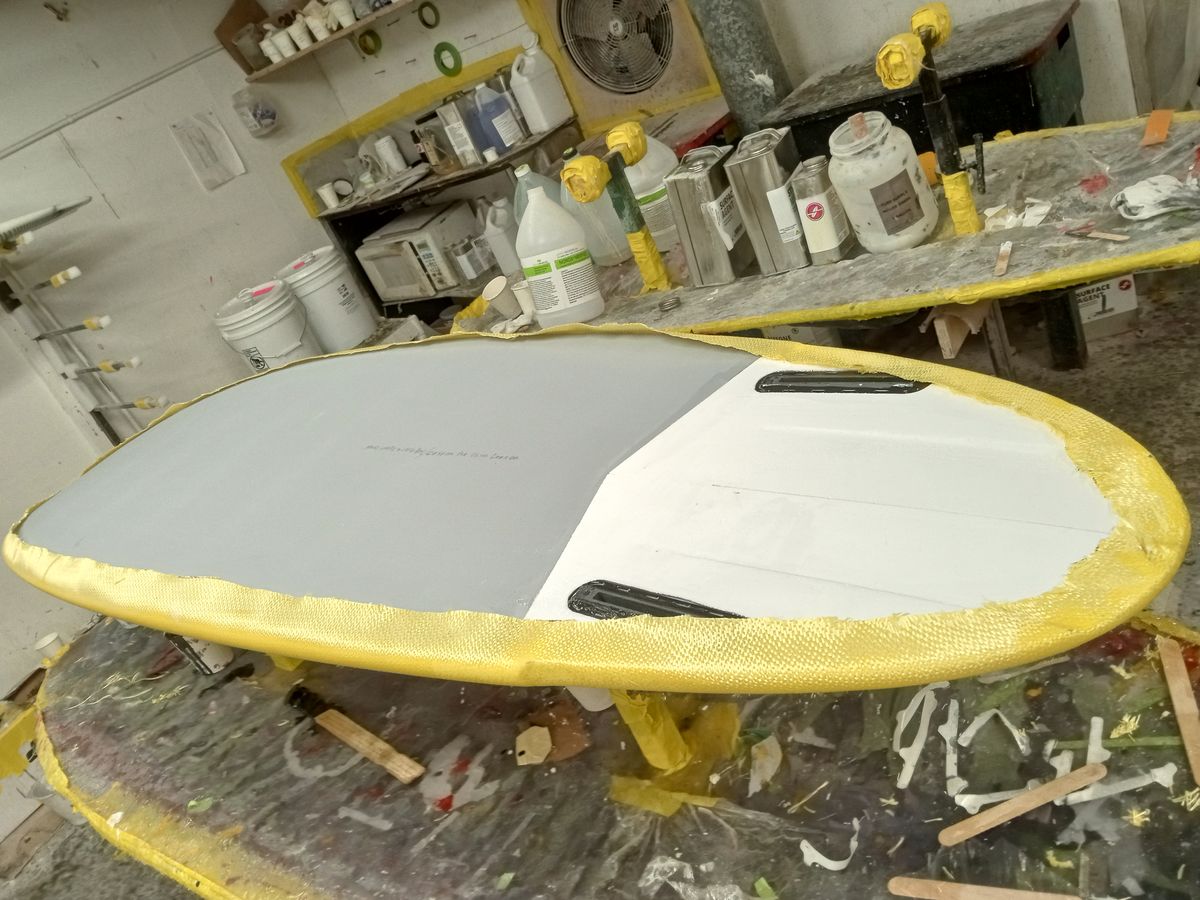
The actual glassing of the Kevlar could be a nightmare. I had so many occasions when just one little thing didn’t suck flush to the foam and disrupted the whole process. The rails are an absolute nightmare. I do not and will not explain how I do it to anyone. Go figure it out for yourself – I did – and I just don’t share these things. Cutting around the fin boxes is a drag, too; not to mention the nose, tails, and wings – Good grief. Horrible.
When you wrap fabric, especially something with a big bold weave like 6 oz Kevlar around a perfect foam shape, it has to lay perfectly. That has and always will be the biggest problem with the whole process. The lap has to be perfectly symmetrical and lay perfectly to the shape of the foam. This is because the Kevlar gets encapsulated by the standard fiberglass.
Imagine having an egg and having to mimic the shell with three layers, and put fin boxes in it and then, not hit the weave when you sand it!! All while cramming it in a big bag wrapped in materials, having wet resin on dry foam to contend with. Then you have tape and spray glue and you have to get this thing all dressed and get it in the bag before the epoxy gels too much. It is NOT EASY.
So now I have perfected the process (actually eight years ago or more I was doing beautiful layups). But, I’ve not got any shops to carry them and my niche guys were only buying them.
I could go on and on but I believe that these are the strongest and lightest strength to weight ratio boards in the world – that also surf great.
That’s the big qualification here. “They also surf great.”
You know all the composite players in the industry and I think the principal problem I hear from people over the decades is PERFORMANCE. My Kevlar boards are different.
I have never felt a stringerless board cut like a hot knife through butter in large surf like these do. The Kevlar boards handle bump, late drops, deep turns at high speeds. They absorb and dampen the chatter of EPS and virtually don't ding. They won’t delam, don’t break and are very light and have epic flex.
I even developed how to do a fin patch so your boxes won't break out as easily! (someone very experienced said it couldn’t be done but I did it).
Surfing one of these boards is how you stay confident in all size waves at home – Or on a trip so you don’t have to buy some turd the local ding repair guy has laying around after breaking your normal board.
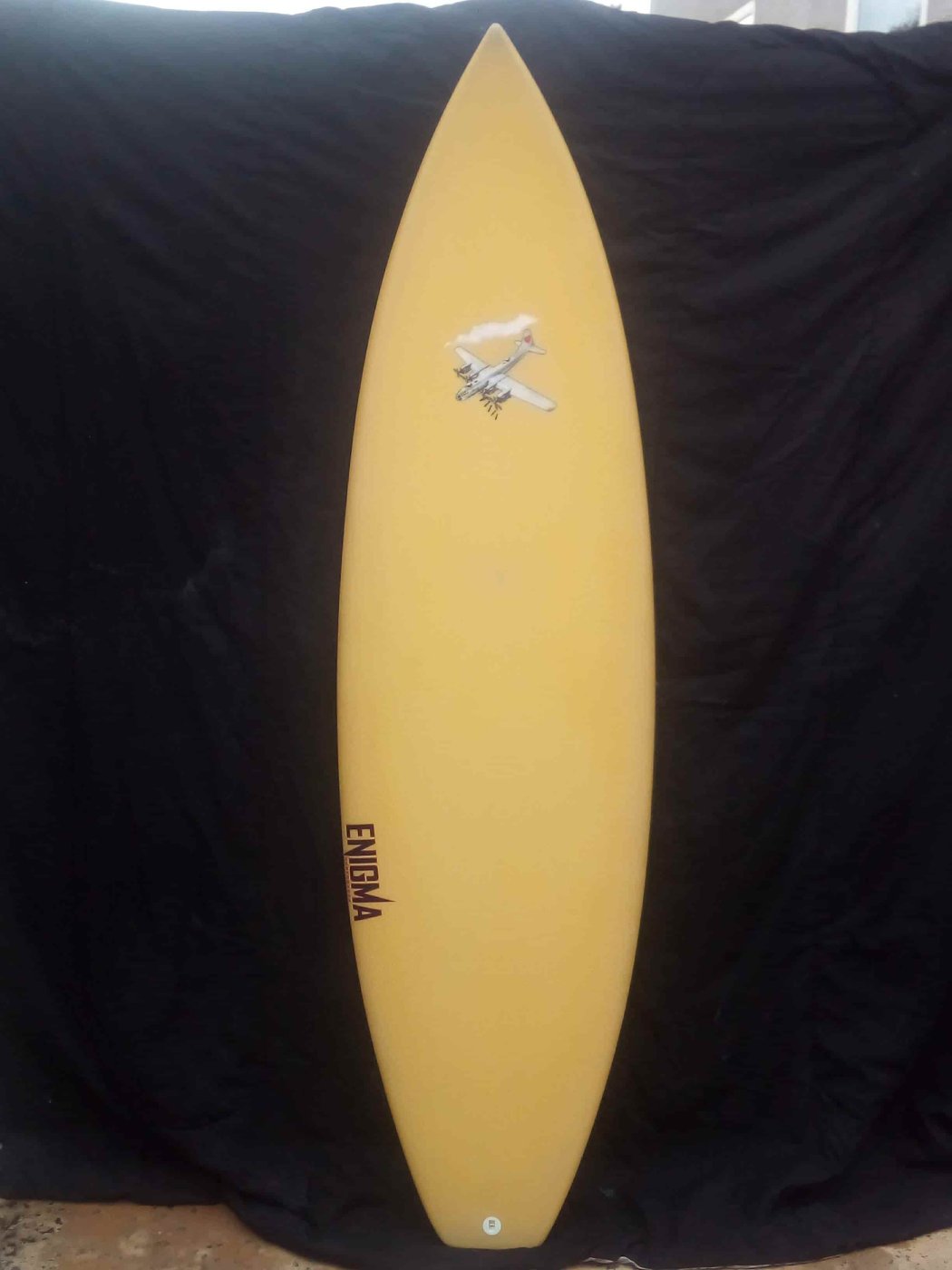
If you have a favorite shape and want the next level of surfboard construction, without all the limitations of other materials and no loss of performance, get it in my Kevlar vacuum bag construction. It will be in your quiver permanently and always be consistent, even as your daily use board. Guys have them for 8 years and they just keep going and going and going!